

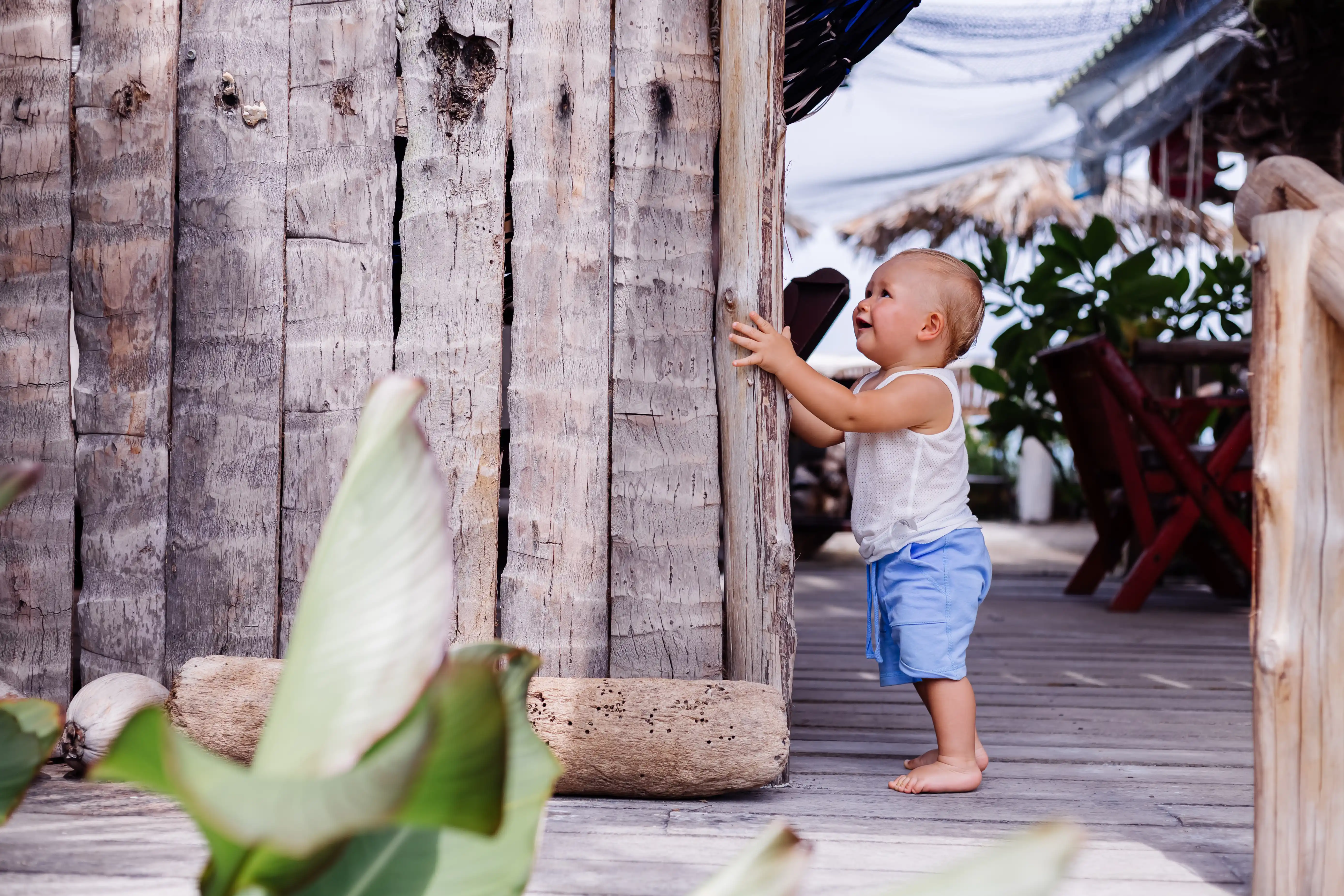
If you are wondering, “Is Bali safe for a toddler? The answer is yes. The island is safe for toddlers, with low crime and a culture that welcomes young children, but you still need to actively manage traffic, sun exposure, mosquitoes, and pool access.
Below you will find the explanation of the real risks, the precautions that matter, and what to look for in a toddler-safe villa. These explanations are helpful to make your trip with a toddler safer and more convenient.
Experiencing a trip in Bali with a toddler is safer than you might expect. The island has low crime because the locals are respectful, making it a perfect destination for a family vacation, especially with young children.
A warm attitude toward children is common, which helps answer the question, “Is Bali safe for kids?” It is the reason you are less concerned about the locals because they are friendly to young children traveling with their families.
For comfortable travel to Bali with a baby, you can hire a private driver or use a licensed taxi. Legal transport providers or drivers who understand local road and traffic conditions make your trip safe.
A private driver can be especially useful for longer journeys because they can manage parking, find suitable routes, and adjust the itinerary when traffic becomes heavy. Request a car seat in Bali so the baby will sit comfortably for the whole trip.
If possible, you can schedule outdoor activities for the morning or late afternoon to avoid the strong heat of the sun between 10 AM–4 PM. During that time, you can take toddlers for lunch, naps, and indoor play, or even take a break in an air-conditioned space.
Avoiding heat is also important to help the toddlers have a comfortable day during the trip. Choose loose, lightweight, breathable clothing that covers skin and wear a wide-brimmed hat, as it shades the face, ears, and back of the neck to protect kids from the sun in Bali.
You also need to check whether your babies are still hydrated. Carry a refillable bottle that can help them drink water or milk, as children may need more fluids than usual during periods of high heat, humidity, and physical activity.
Because of Bali's lush natural scenery, you may find mosquitoes in Bali during the trip. This is an issue you have to pay attention to, which becomes a particularly important aspect of how to travel with kids, especially when visiting the island.
Bringing insect repellent is important to protect your toddlers from mosquito bites. The bites may cause dengue fever, so you have to apply the repellent all over your children's bodies to keep them from getting sick.
You should avoid drinking tap water in Bali. You can use factory-sealed bottled water or properly treated drinking water to stay hydrated under Bali’s weather.
For health reasons, you should avoid food that has been precooked or displayed at room temperature, particularly meat, seafood, rice dishes, and sauces containing dairy or eggs. Food from street vendors carries a higher risk of illness, so you should choose freshly cooked dishes for toddlers.
Swimming in villas can be a kid-friendly activity when visiting Bali. To make it safe for toddlers, paying attention to pool safety in Bali's villas is a must because not all accommodations have fenced pools.
Whenever a toddler is in or beside the pool, you should keep them within arm’s reach, which is known as touch supervision. The adult should be able to reach and lift the child immediately rather than watching from a sunbed, terrace, or indoor living area.
To avoid a risky situation, one adult should ideally be familiar with basic water rescue and child CPR. Ask the villa where its first-aid kit, rescue equipment, and emergency contact information are located, so when accidents happen, you can help your toddlers immediately.
In Indonesia, especially Bali, a baby car seat is not legally required and is rarely available in taxis or ride-share. Bringing your own car seat offers several advantages, as it avoids receiving a seat that is too large, too small, damaged, or missing instructions.
Avoid holding a toddler on an adult’s lap since it does not provide reliable protection during sudden braking or a collision. An adult can’t safely restrain a child against crash forces, even during a slow or short journey.
It is recommended to use a car seat during the whole trip, as it is safer than riding a motorcycle. A toddler can’t reliably hold on, remain properly positioned, or protect their head and body during sudden braking or a collision.
When visiting Bali for the first time, you should understand its own character and appeal. Family-friendly areas in Bali, such as Sanur and Nusa Dua, are popular for calmer beaches.
Staying in Sanur and Nusa Dua may lead you to a calming environment where you can enjoy kid-friendly attractions. You can play together with toddlers to build a sandcastle on the beaches, cycle around the coast with the babies on your lap, or enjoy the sunrise.
For spectacular nature views, you can come to Ubud with toddlers. Enjoy the day while walking through the pedestrian area to see the rice fields, and walking with your kids in the stroller through the rice fields will give you remarkable memories, even though you have to be aware of uneven paths during the walk.
To make your trip comfortable, arrange a pre-travel appointment with your child’s paediatrician or a travel-health professional, ideally four to eight weeks before departure. Vaccines need several doses or time to provide protection, although a last-minute consultation can still be worthwhile.
You can also bring enough of every regular prescription medicine for the entire holiday, plus a small additional supply in case of travel delays. Keep medicines in their original labeled packaging and carry essentials in hand luggage rather than checked baggage.
In case of an emergency, you can visit BIMC Hospital located at Jl. Bypass Ngurah Rai No 100X, Kuta 80361, Bali, Indonesia. It is a paediatric-capable option that provides treatments for toddlers who get sick during the trip, with emergency contact at +62361761263 or +6281139608500.
Selecting a toddler-safe villa requires knowing if it has adequate amenities while you are staying there. Call the receptionist in advance to ask whether the accommodation has a fenced pool to make sure your babies won’t accidentally fall.
A single-story layout of the accommodation also helps you have a memorable, safe stay with your toddlers. It means you are in the same room with them, not separated, so you can supervise what they are doing during the trip.
Warm and attentive staff are also helpful in making your stay with toddlers safe and comfortable. They will give your kids close attention, as they provide what the babies need during their stay in accommodation, like in SOLO’s private pool family villas.
Finding the best temporary base can answer the question, “Is Bali safe for a toddler?” Because a good base can help you have a memorable experience staying with your toddlers on the island.
You can book a SOLO accommodation, a villa with a fenced pool area, for the safest temporary base with your toddlers. Our attentive service is ready to elevate your stay moment with toddlers, leaving you with a good impression.
Yes. For safety, babies and toddlers should travel in an age- and size-appropriate car seat whenever they are in a car, including taxis and private transfers.
Do not give toddlers untreated tap water to drink in Bali. Use sealed bottled water or properly treated water for drinking and, when water quality is uncertain, for brushing teeth and preparing formula as well. Current travel advice for Indonesia recommends boiled or bottled drinking water because waterborne illnesses occur in the country.
Sanur is one of the best all-round areas for families with toddlers, particularly for parents who want a calmer atmosphere, beachfront walks, restaurants close by, and less of a nightlife focus. Its beachfront promenade also makes some parts of the area easier to explore on foot. Nusa Dua is another strong option if your priority is a self-contained resort with pools, kids’ facilities, and most daily needs in one place.
They can be, but you should check the villa carefully before booking. Ideally, choose accommodation with a four-sided pool fence, a self-closing and self-latching gate, and lockable doors between the villa and pool. Toddlers still need close and constant adult supervision whenever they have access to water, even if they have had swimming lessons or are wearing flotation aids.
Yes. Bali can be very family-friendly, with plenty of private villas, family resorts, beaches, pools, restaurants, nature experiences, and activities suitable for young children. The key is choosing accommodation and transport with a toddler in mind rather than assuming every tourism facility is automatically child-safe. Road traffic can be extremely congested and unpredictable, so allowing extra travel time and using a reputable driver can make family trips much easier.
The main things to plan for are traffic, car-seat availability, unfenced swimming pools, heat and sun exposure, mosquitoes, food and drinking-water hygiene, and contact with animals. Indonesia has year-round mosquito-borne disease risks, and current CDC advice also tells travellers to avoid unfamiliar dogs, cats, and wild animals because of rabies risk. If a baby or toddler is bitten or scratched by an animal, seek medical attention immediately.
It is also worth discussing your child’s routine and travel vaccinations with a doctor before departure. CDC currently advises travellers to Indonesia to be up to date with routine vaccinations and to discuss destination-specific recommendations with a healthcare provider.
Yes, Bali can be a suitable destination for a two-year-old when parents take sensible precautions. Choose a toddler-safe villa or family resort, use a proper car seat, supervise constantly around pools and beaches, provide safe drinking water, protect against mosquitoes and heat, and keep young children away from unfamiliar animals.